
3 reasons why food affordability leaves such a bad taste in our mouths
While inflation has touched nearly every part of the economy, rising food costs are gnawing at consumer wellbeing in ways that cost them a lot more than just money. Here are the three key reasons why this is such a bitter pill for consumers to swallow.
Everyone’s gotta eat
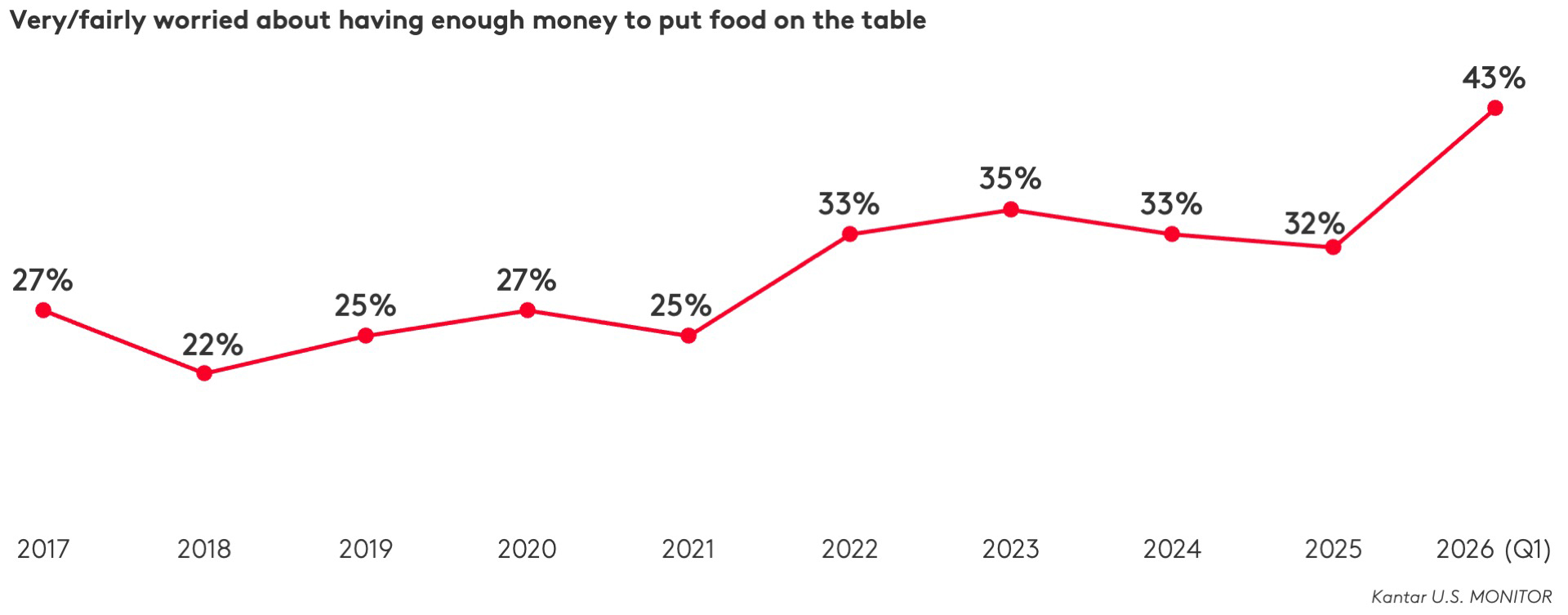
Food costs make affordability feel more tangible because we’re confronted with it every day. The average American spends almost an hour and a half eating or drinking every day and makes food or beverage purchases almost daily. Because of that frequency and salience, rising prices are felt more acutely than other costs. Each grocery trip, restaurant visit, coffee break, or snack attack carries just a little more financial stress, heightening our sense of personal vulnerability—an anxiety we can see in the sharply rising concern about having enough to simply put food on the table.
Food is love
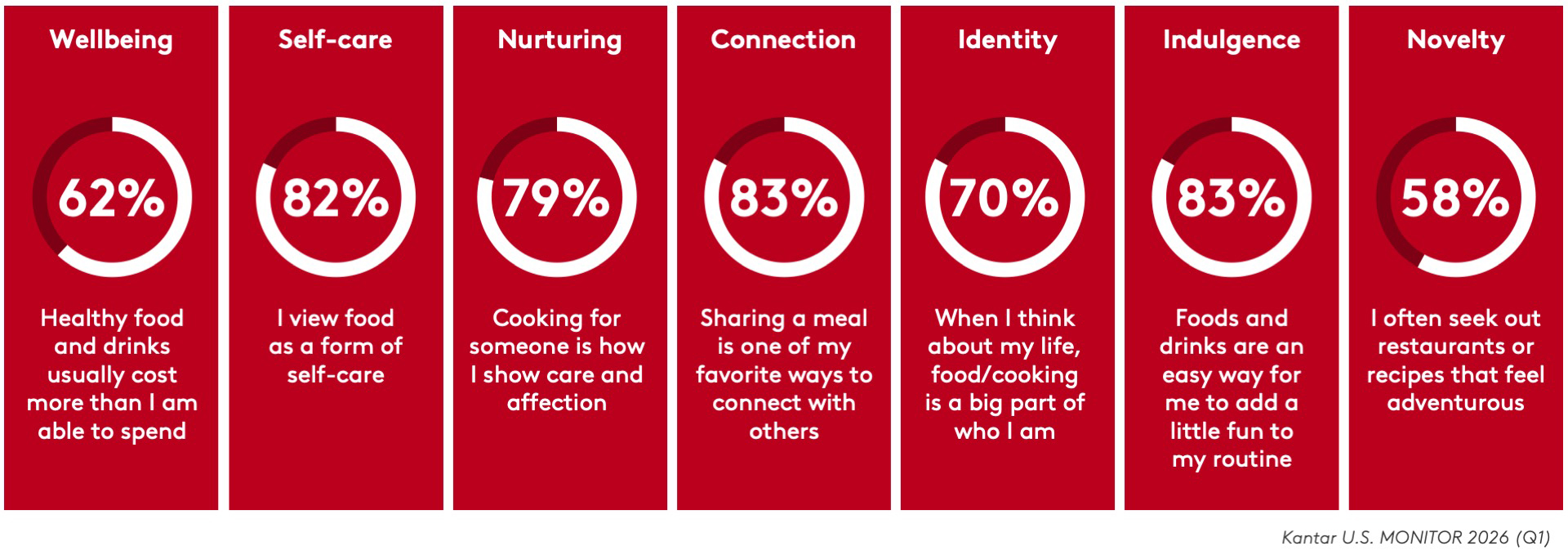
Food affordability cuts so deeply into the consumer psyche because it strikes at the heart of consumers’ core motivations. If food is how we stay healthy, food austerity makes us less well. If food is self-care, food austerity is akin to emotional neglect. If food is how we care for one another, food austerity is letting down your loved ones. If food is how we socialize, food austerity might equate to loneliness. If food is our identity, food austerity might dent one’s self-image. If food is how we adventure, food austerity might feel like stagnation. If food is how we treat ourselves, food austerity feels like punishment. Food inflation hurts because it takes so many key pieces of the good life off the table.
Aspirational appetites
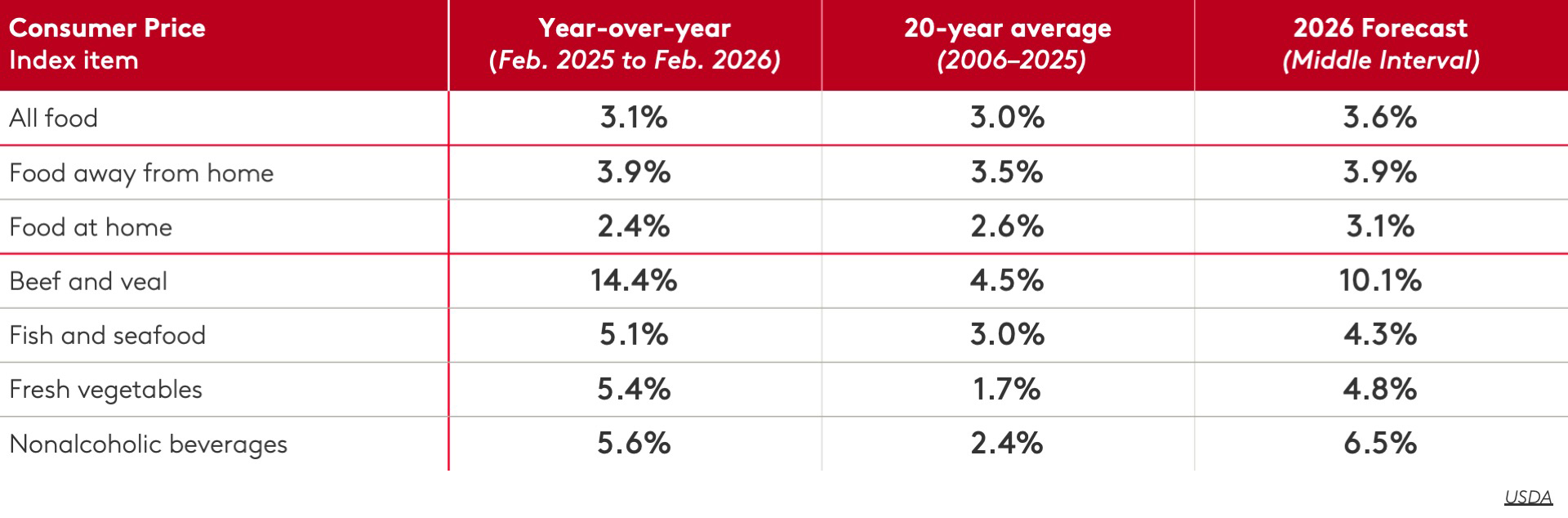
Adding insult to injury, prices are rising faster for the things people want the most. Today, as consumers are trying eat healthier, prices for fresh vegetables are outpacing general food inflation. As GLP-1s and other health trends create more demand for protein, the cost of beef and fish are outpacing inflation. As alcohol moderation continues to gain traction, non-alcoholic beverage prices are going up. And while people try to keep up with the frenetic pace of life, coffee costs are soaring. In short, prices for what people want more of on their plates and in their cups are going up faster than those for the stuff they care less about, making food inflation feel even worse.
Looking ahead
Both food at home and food away from home are projected to see price increases that exceed overall inflation throughout 2026, signaling little relief for consumers in the near future. As food affordability becomes an everyday practical and emotional hazard, it touches all aspects of consumer life, in and out of the food and beverage category. To explore these dynamics in greater depth, the U.S. MONITOR Spotlight on Food Affordability examines how rising food costs are reshaping everyday decisions, emotional wellbeing, and perceptions of value; unpacking where consumers are cutting back, what they’re protecting, and how brands can show up meaningfully when affordability becomes personal. Click below for more information.