
Gen Z women feel more defined and confined by their gender

For years, Gen Z has been at the forefront of the cultural push to loosen gender norms. They are more accepting of nonconformity, more comfortable with fluid identities and more likely to reject rigid expectations about how people should live their lives. By many measures, they are leading a cultural shift toward greater freedom of self-expression.
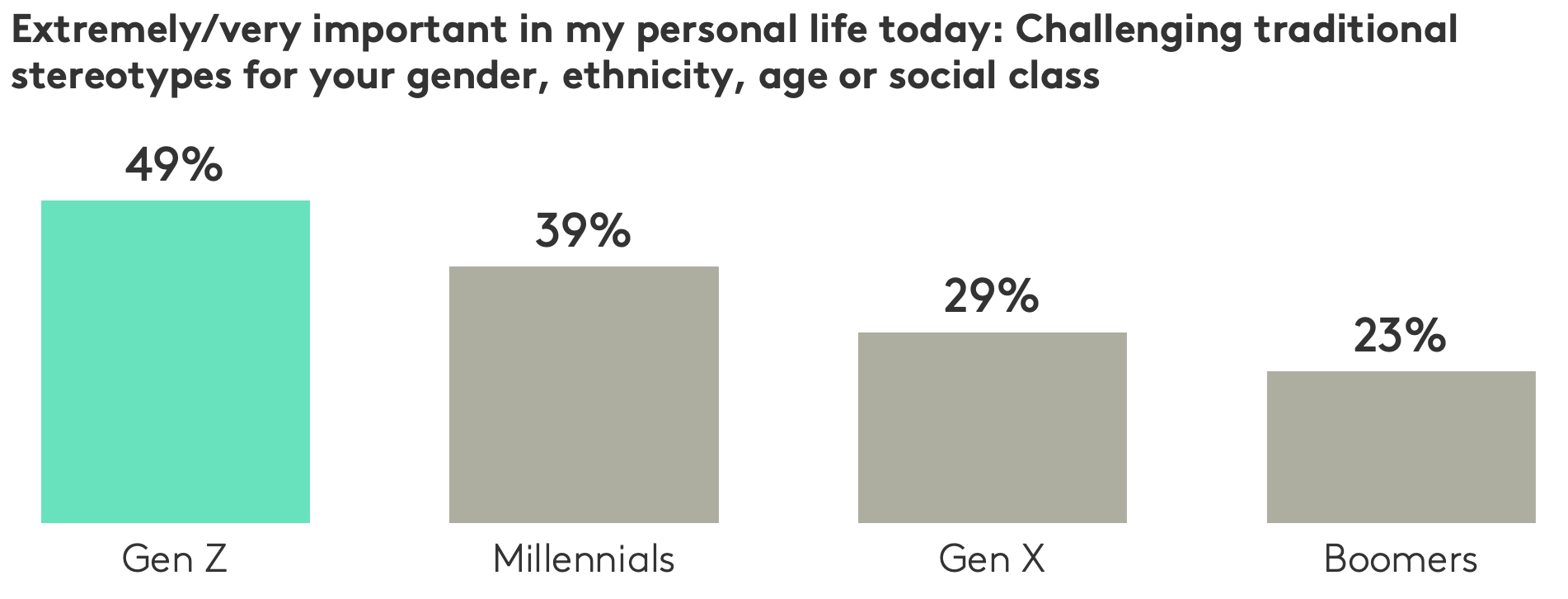
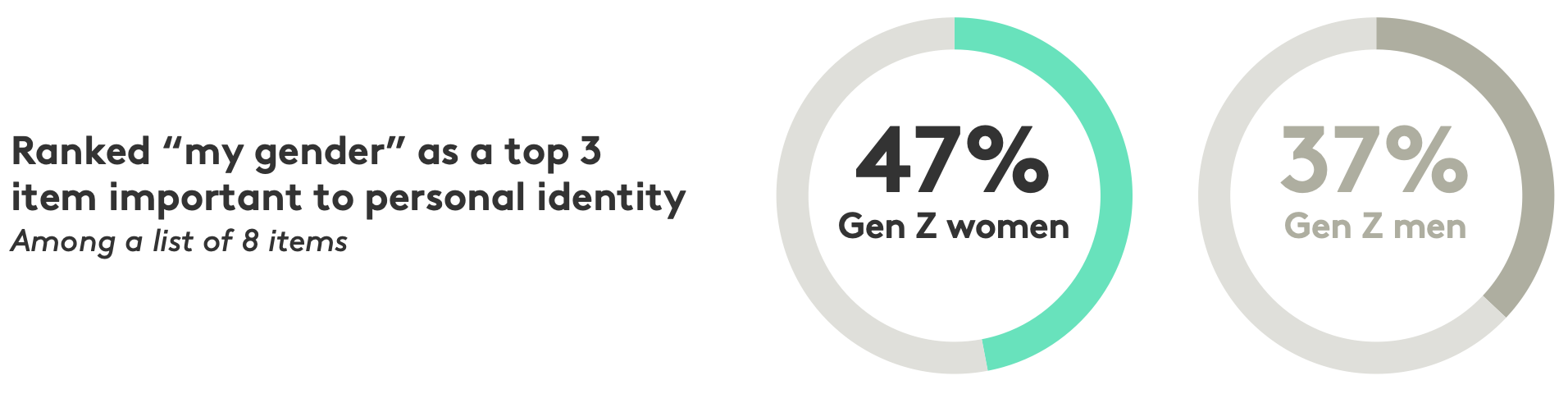
Beneath the progress lies a more complicated reality for young women. Recent U.S. MONITOR data shows that Gen Z women are more likely than Gen Z men to view gender as a central part of their identity. At face value, this suggests they are embracing womanhood rather than moving beyond it.
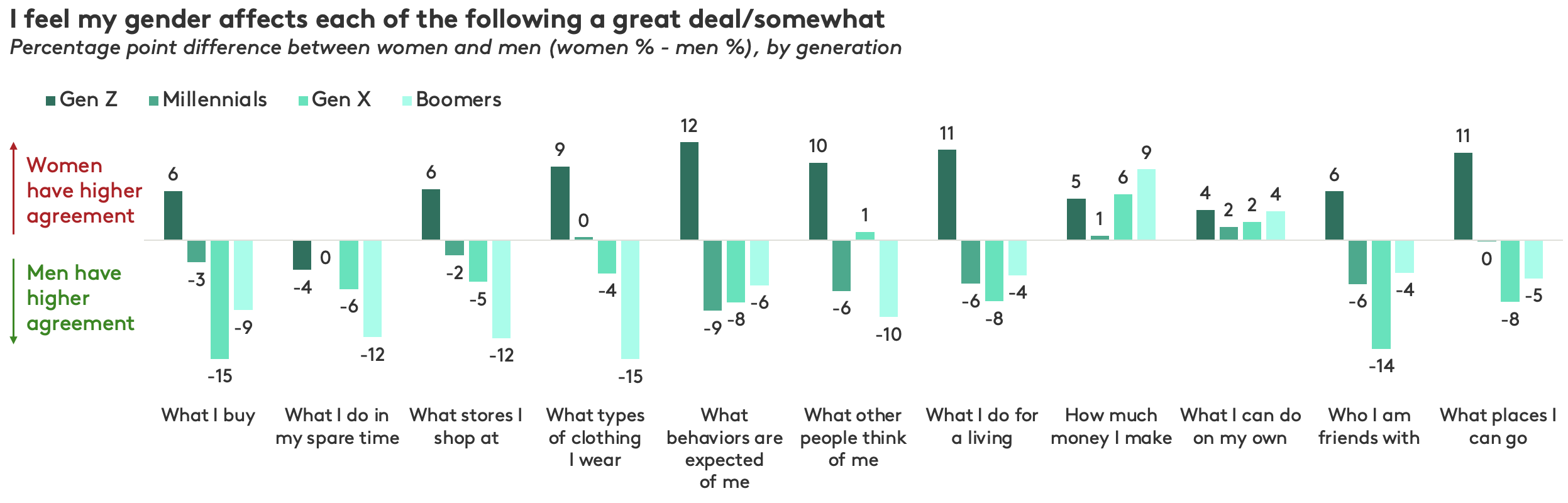
But a deeper look at how people experience gender on a daily basis reveals a more nuanced reality. Gen Z women are significantly more likely than older generations of women and far more likely than men their age to say their gender affects various aspects of their lives—everything from what they buy and wear to what behaviors are expected of them, what others think of them and how much money they make.
This may seem contradictory—why would a generation raised to challenge gender norms feel so shaped by gender? The answer may be that expanded possibilities have not eliminated pressure. Gen Z women have come of age at a moment when the acceptable ways to be a woman have expanded dramatically—they face fewer expectations to follow a single path through adulthood, career or family life.
Yet the greater freedom they enjoy has not necessarily translated into freedom from scrutiny. Instead, many women are navigating an increasingly complex landscape of expectations: be ambitious but approachable, confident but authentic, successful but balanced. As a result, gender remains highly salient, not because young women are embracing traditional definitions of womanhood, but because they continue to feel its influence in everyday life.
For brands, this creates an important challenge: Gen Z women are pushing against gender norms while still actively navigating their realities. Can your brand hold both truths at once instead of flattening them into simple empowerment?
This tension between freedom and constraint is just one of the insights explored in U.S. MONITOR’s 7 Things to Know About Women report, which highlights the evolving pressures, expectations and opportunities shaping women’s lives today.