
Gen Alpha’s Early Signals: the 2027 Youth Outlook

Gen Alpha is arriving earlier than you might think.
For years, Gen Z has been the youngest generation commanding marketers’ attention. But the generational baton is already starting to pass. Gen Alpha now account for 70% of children under 18. Though the oldest Alphas are only 13 today, this cohort is growing up with more input into family decisions, earlier access to financial tools, commerce and technologies that give them unprecedented influence over the world around them. As this group exerts their influence on brands and trends, marketers are eager to understand exactly who Gen Alpha might become.
A word of caution, though: Gen Alpha is not yet a generation. A cohort’s generational hallmarks (the values and beliefs it carries into adulthood) are shaped by its formative teen and young adult years—and Gen Alpha has yet to enter those years.
Rather than making sweeping predictions about who this cohort will become, Kantar MONITOR’s 2027 Youth Outlook explores three early signals shaping Gen Alpha across leisure, consumption, and technology.
Signal #1: Leisure
Gen Alpha won’t go looking for experiences—they’ll expect in-speriences that come to them
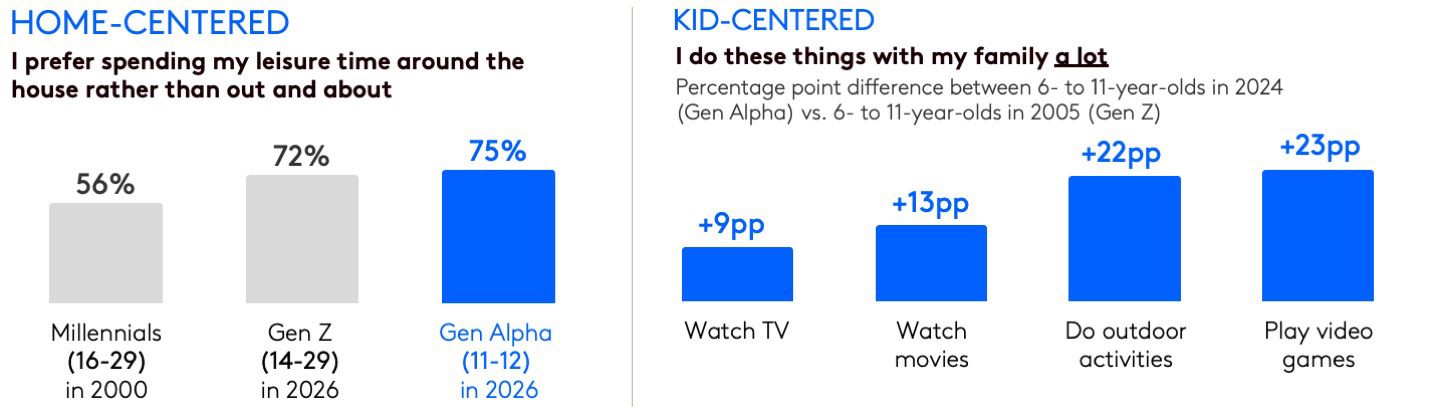
Gen Alpha’s childhood is unusually home-centered. Thanks to forces ranging from the turn selfward to the explosion of at-home entertainment options, young people are more likely today to prefer spending their free time at home rather than out and about. At the same time, their homes are increasingly kid-centered. Gen Alpha’s Millennial parents try to incorporate their children into more family decisions, spend more time together as a family and bond over shared interests.
These shifts in parenting and lifestyle are changing what a leisure experience looks like for Gen Alpha. Rather than going somewhere and being entertained, Alphas are increasingly encountering in–speriences: experiences that come to them, invite participation and allow them to take the lead.
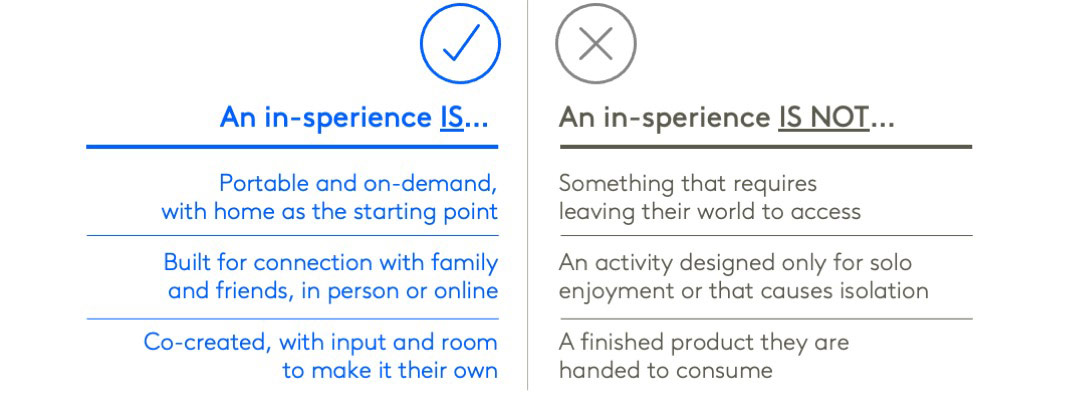
That raises a provocative question for brands: What if teens and tweens start to believe that being included matters more than being entertained? How might the rise of in-speriences force brands to reconsider what, where and how they deliver meaningful experiences for Gen Alpha?
Signal #2: Consumption
Gen Alpha will enter the marketplace years ahead of schedule as proudly sophisticated and discerning consumers.
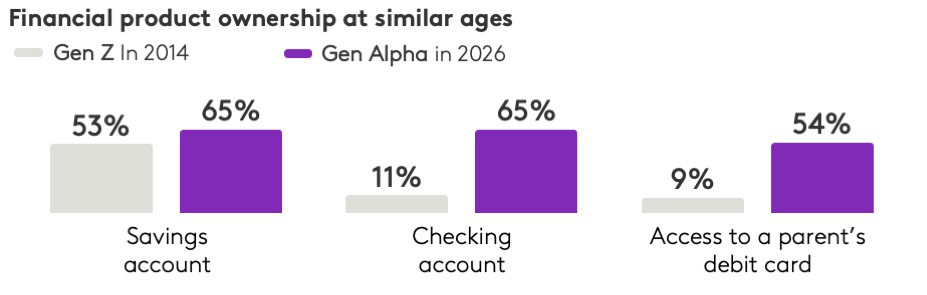
Gen Alpha’s financial education is starting early, too. Parents are introducing money management well before their children earn their first paychecks. Youth-focused checking accounts, debit cards and even investing products are giving Gen Alpha more sophisticated ways to interact with and learn the value of money.
At the same time, Millennial parents are letting their Gen Alpha kids exert more control over household spending decisions—whether that means giving them a say in the checkout line, letting them hit “add to cart” or taking their advice about a new product or brand they saw online. Young as they may be, Gen Alphas take their roles as household influencers seriously, already approaching their consumption decisions with a discerning eye.
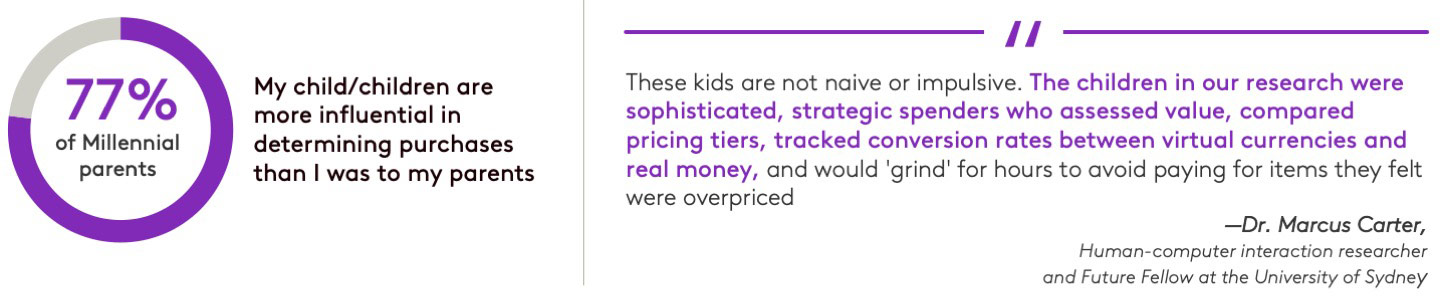
For brands, this raises more considerations: What if Gen Alpha’s financial literacy arrives before their financial independence? Will brands face teenagers who are unusually practiced at comparing value, questioning claims and spotting the difference between a compelling offer and a bad deal?
Signal #3: Technology
Gen Alpha will judge AI less on ethical abstractions and more on their experiential reality.
Then there is AI. For older generations, AI is steeped in moral baggage. It’s seen as a technology to debate, adopt or reject. For Gen Alpha, AI may never occupy that category. In fact, it may not even be seen as a distinct technology but rather as infrastructure inherent in their world.
The oldest Alphas were around 10 when ChatGPT arrived, meaning many will not remember a world without AI—and early data shows this is creating a divergence between Gen Alpha and Gen Z. While Gen Z are skeptical of AI, Gen Alphas are more open to it; they’re more likely to both want to improve their AI skills and approve of AI-generated media and entertainment.
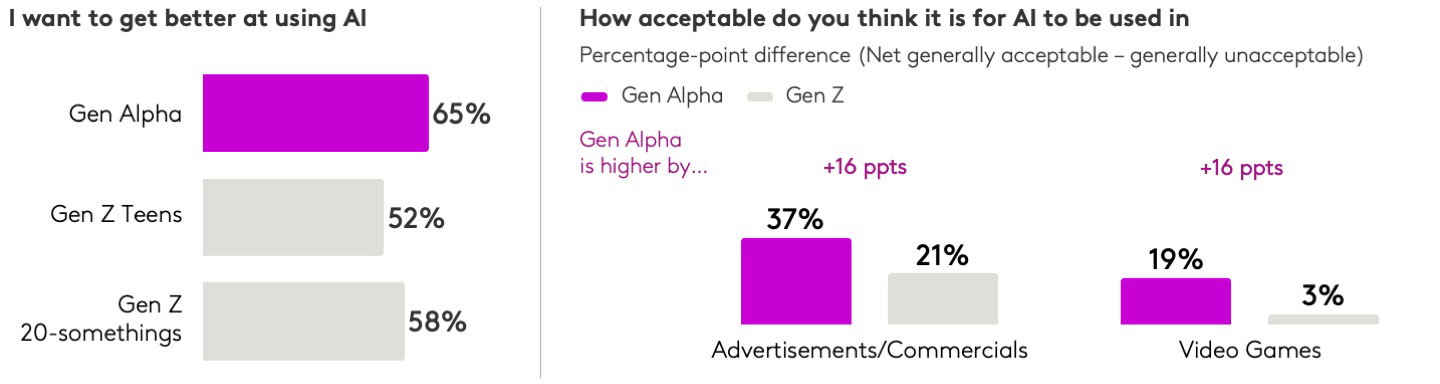
Yet Gen Alpha is also growing up surrounded by AI slop. Much of the AI they experience today is repetitive and mundane, not world-changing. That combination matters because while AI itself may not impress Gen Alphas, AI that is transformative will.
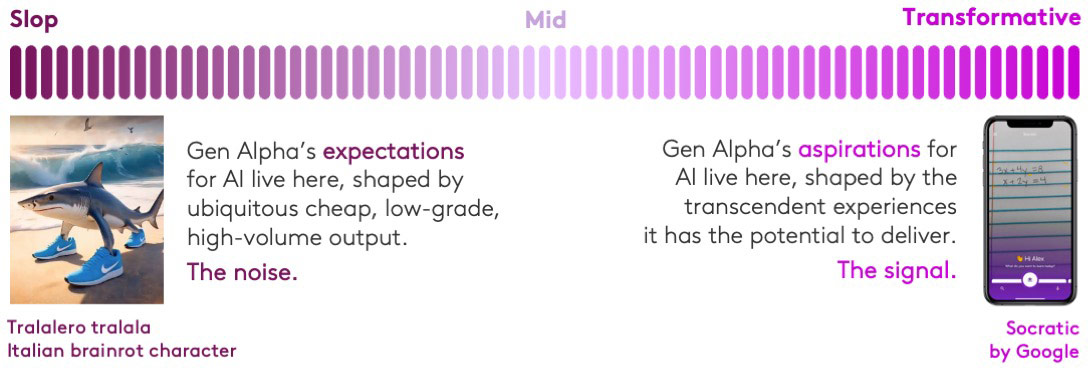
For brands, simply putting AI into something won’t signal innovation to Gen Alpha—nor will it spark an ethical debate. Instead, Alpha could judge AI entirely by their experience with it: Does it make something easier? More creative? More interesting? More theirs?
These signals offer an early glimpse of the generation Gen Alpha might become, but there is still much more to learn as this cohort comes of age.
MONITOR will continue tracking how Gen Alpha’s evolving expectations reshape leisure, consumption and technology, among other areas of life. Contact us to explore what these shifts could mean for your brand and learn more about our broader youth insights.